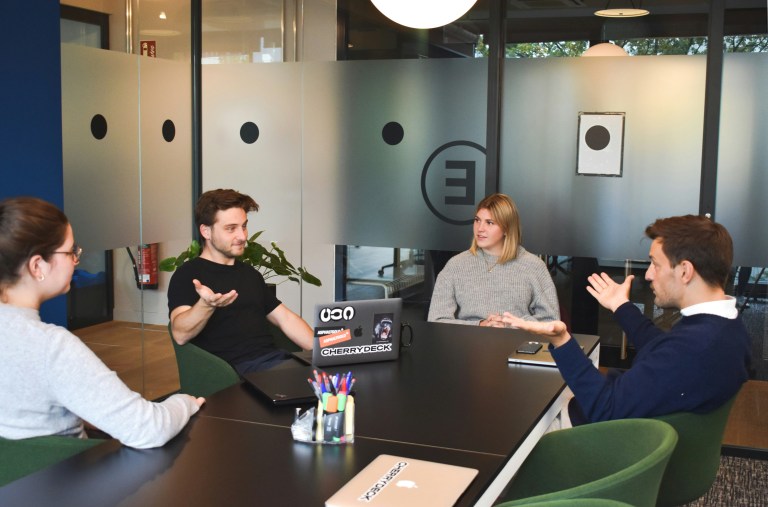
Every organisation has a formal curriculum. It appears in policies, procedures, and role descriptions. Yet, alongside it runs a quieter, more influential lesson plan: how people treat one another, whose voices matter, and what behaviours are truly valued. This is the hidden curriculum of work. Across Europe, institutions and employers increasingly recognise that technical competence alone does not build trust, inclusion, or long-term engagement. Instead, empathy in the workplace shapes whether people feel respected, understood, and motivated to contribute. At a time when organisations face social fragmentation, cultural diversity, and declining institutional trust, this hidden curriculum matters more than ever.
Empathy in the Workplace as a Core Professional Skill
Empathy in the workplace is often misunderstood as a soft or optional quality. In reality, it is a foundational professional skill that enables collaboration, sound judgement, and fair decision-making. When employees listen actively and respond with understanding, misunderstandings reduce and cooperation improves.
Over time, teams that practise empathy develop stronger psychological safety. People speak up earlier, address issues constructively, and engage more confidently with colleagues and the public. In turn, organisations benefit from clearer communication and more resilient working relationships.
Empathy also plays a critical role in public-facing environments. Visitors, citizens, and stakeholders rarely remember exact information, but they remember how an interaction made them feel. Feeling acknowledged and supported is often what turns information into understanding.
Cultural Awareness Training and the Reality of Diverse Workplaces
Europe’s workplaces reflect diverse languages, histories, and lived experiences. Without shared cultural understanding, even well-intentioned teams can misread behaviour or unintentionally exclude others. This is where cultural awareness training becomes essential rather than symbolic.
Effective cultural awareness training moves beyond facts or etiquette. It helps people recognise their own assumptions, understand different communication styles, and adapt respectfully in real situations. Just as importantly, it builds confidence to engage rather than withdraw when differences arise.
In public and institutional settings, cultural awareness and empathy in the workplace directly affect accessibility and inclusion. Staff who understand cultural context can explain complex ideas more clearly, respond calmly to sensitive questions, and ensure that no visitor feels invisible or unwelcome.
Human Skills Development as Organisational Infrastructure
While technology continues to evolve, it does not replace judgement, listening, or emotional awareness. Human skills development is therefore not a “nice to have,” but core organisational infrastructure.
Human skills include empathy, clarity, emotional regulation, and the ability to hold respectful conversations under pressure. These skills determine how policies are applied, how conflicts are resolved, and how values are expressed in daily behaviour.
Organisations that invest in human skills development create consistency between what they stand for and how people experience them. This alignment strengthens credibility, both internally and externally. It also supports employees, who feel better equipped to manage complexity rather than overwhelmed by it.
Empathy In The Workplace Workplace and Everyday Behaviour
Closely connected to empathy is emotional intelligence in the workplace. Emotional intelligence allows individuals to recognise emotions in themselves and others, and to respond thoughtfully rather than reactively.
In practice, this shows up in small moments: a calm response to frustration, a clarifying question instead of an assumption, or a pause before delivering difficult information. These moments shape workplace culture far more than strategy documents.
When emotional intelligence becomes part of everyday behaviour, teams handle pressure with greater composure. Leaders model accountability and respect. Staff feel safer to engage authentically, which reinforces trust and shared responsibility.
Empathy In The Workplace: Learning Through Experience, Not Just Instruction
The hidden curriculum of work is learned through observation and experience. People watch how leaders listen, how differences are handled, and how mistakes are treated. Training is effective when it reflects this reality.
Experiential initiatives, such as facilitated dialogue or cultural programmes like Walk of Truth, demonstrate how structured human interaction can foster reflection, listening, and mutual understanding. These experiences show that cultural engagement is not abstract. It is practical, embodied, and deeply human.
Such approaches mirror what many European institutions seek to achieve: spaces where dialogue replaces distance and understanding replaces assumption.
Building Capability Through Empathy-Focused Training
At Octagon Professionals, training focuses on strengthening empathy in the workplace by developing emotional intelligence, cultural awareness, and proactive engagement skills. We assist employees understand how to connect with diverse audiences, listen with intention, and respond with confidence and authenticity. This approach supports staff not only to inform, but to engage meaningfully, ensuring that every interaction reflects institutional values and respect for individual experience.
Strengthening Trust Through the Human Curriculum
The hidden curriculum of work ultimately shapes how organisations are perceived and trusted. When empathy, cultural awareness, and emotional intelligence guide daily behaviour, institutions feel more accessible, fair, and human.
In a European context built on dialogue, inclusion, and shared responsibility, this matters profoundly. Teaching the human side of work is not about changing values, but about living them consistently. In doing so, organisations strengthen trust, not through words, but through everyday interactions that make people feel seen, heard, and respected.