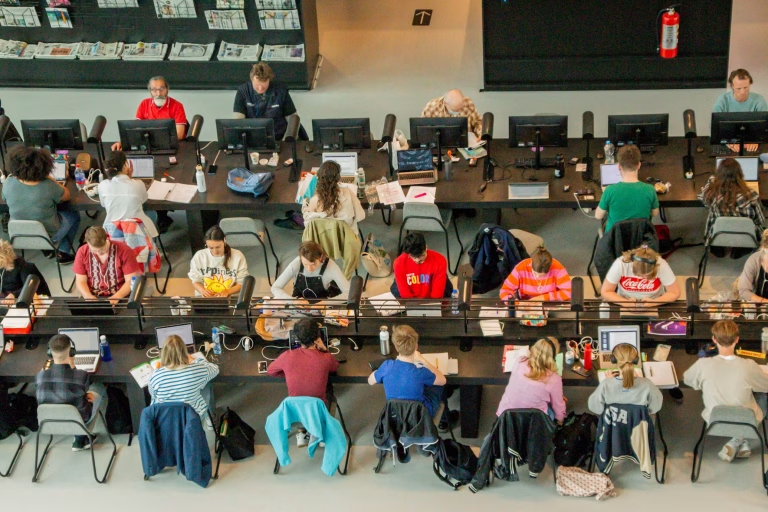
You have signed your contract, so your move is now real. This guide walks you through what happens next when living and working in the Netherlands. It covers registration, documents, housing, utilities and the cost of living. As a result, you can settle faster and avoid common newcomer mistakes.
What does living and working in the Netherlands involve?
Living and working in the Netherlands means combining a new job with a fast set-up of your Dutch admin. First, you register your address. Next, you get a BSN and DigiD. After that, you arrange housing, health insurance and a bank account. Most newcomers finish the essentials within their first month.
The Dutch system rewards early action. Your employer handles your work permit and payroll. However, you handle your personal registrations. Because everything connects to your BSN, the order matters. Therefore, treat registration as your first priority. Many expats underestimate waiting times, so book appointments before you arrive whenever possible.
Which documents do you need for living in the Netherlands?
Living and working in the Netherlands requires a few core documents from day one. You need a valid passport or ID, your employment contract, and proof of your Dutch address. In addition, bring your birth certificate. Documents from outside the EU often need an apostille and a sworn translation.
Prepare these before you travel, because sourcing them later is slow:
- Valid passport or national ID card
- Signed employment contract or offer letter
- Rental contract or other proof of address
- Birth certificate, apostilled if your country requires it
- Marriage certificate, if you move with a partner
- Sworn translations for documents not in Dutch, English, French or German
Your municipality confirms the exact list. So always check its website first.
How do you register and get your BSN and DigiD?
First when you need to start living and working in the Netherlands, book an appointment at your local municipality (gemeente) to register your address. During this visit, the clerk issues your BSN, the citizen service number you need for everything. Next, apply for DigiD. Your activation code then arrives by post within a few working days. Follow this order, because each step unlocks the next:
- Register at the gemeente. You must register if you stay longer than four months. Book early, since waiting times reach several weeks in big cities.
- Receive your BSN. Some municipalities issue it immediately, while others post it within days.
- Apply for DigiD. This digital ID logs you into government, tax and health portals.
- Open a Dutch bank account. You need your BSN, passport and proof of address.
- Share your BSN with your employer, so payroll can run correctly.
Late or missing registration can trigger a fine of up to €325 in 2026. Therefore, do not delay this step. A handful of digital portals run most of your Dutch admin. So set them up early:
- DigiD app: your secure login for almost every government service.
- MijnOverheid: your central inbox for official letters and personal records.
- Belastingdienst: the tax office portal for returns and the healthcare allowance.
- Your insurer’s app: for claims, coverage details and the deductible.
- Your bank’s app: Dutch daily life relies on iDEAL payments and Tikkie requests.
What is the cost of living in the Netherlands in 2026?
The cost of living in the Netherlands depends on your city, household and lifestyle. In 2026, a single person typically spends around €1,000 to €1,600 per month excluding rent living and working in the Netherlands. Housing is the largest expense. Amsterdam costs more, while The Hague and smaller towns usually sit lower.
The table below shows rough monthly figures for one person in 2026. Treat them as averages, not fixed prices.
| Expense | Approximate monthly cost (2026) |
| Rent, one-bedroom apartment | €1,150 to €1,450 |
| Utilities (gas, electricity, water) | €200 to €270 |
| Basic health insurance | €142 to €185 |
| Groceries | €250 to €400 |
| Public transport | €60 to €105 |
| Internet and mobile | €40 to €70 |
These numbers shift with energy use and daily habits. For example, cooking at home keeps food costs down. Eating out daily breaks most budgets quickly.
What are the main living expenses in the Netherlands?
The main living expenses in the Netherlands are rent, utilities, health insurance, groceries and transport. Rent dominates most budgets. Utilities, including your electricity bill, often surprise newcomers. Therefore, always ask which costs your rent already includes, and get the answer in writing before you sign.
Rent for a one-bedroom apartment averages roughly €1,150 to €1,450 per month in 2026. Three-bedroom homes cost more. If your employer does not arrange housing, start your search early, because demand is high.
Utilities for an average apartment run about €200 to €270 per month. This covers gas, electricity and water. Your electricity bill varies with insulation and habits, so compare energy contracts carefully.
Groceries cost a single person around €250 to €400 per month. Public transport adds €60 to €105 for regular commuters. Internet and a mobile plan together cost about €40 to €70. As a result, careful planning keeps your living expenses in the Netherlands predictable.
Budget for a one-off setup month when you start living and working in the Netherlands as well. Landlords usually ask for a deposit, often one or two months’ rent. In addition, you pay for furniture, registration of utility contracts and a local SIM. Therefore, your first month abroad costs noticeably more than later ones.
Do you need health insurance when living and working in the Netherlands?
Yes. Health insurance is mandatory for everyone living and working in the Netherlands. You must take out basic Dutch insurance within four months of receiving your BSN. In 2026, the average basic premium is about €159 per month. A fixed annual deductible of €385 also applies.
Choose a basic package (basisverzekering) from any licensed insurer. By law, every basic package covers the same core care, so price and service set them apart. Children under 18 pay nothing. If your income is low, you may claim the healthcare allowance (zorgtoeslag) through the tax office using your DigiD. Also register with a local GP (huisarts), because they coordinate most of your care.
What is living in The Hague, Netherlands, like as an expat?
Living in The Hague, Netherlands, suits many expats well. The city hosts the Dutch government, embassies and international courts. As a result, it has a large international community and strong English-language services. Rents usually sit below Amsterdam, while the coast and parks add quality of life.
The Hague offers a calmer pace than Amsterdam, yet keeps city amenities. International schools, expat networks and English-speaking services make settling easier. The Hague International Centre also helps newcomers with registration and BSN appointments. Therefore, many people find living and working in the Netherlands as an expat smoother here. Public transport connects the city well, and the beach at Scheveningen sits minutes away.
How do you adapt to daily life in the Netherlands?
You adapt fastest by leaning into local habits early. Most Dutch people speak excellent English, so daily life rarely stalls. However, basic Dutch helps with paperwork and friendships. Cycling, direct communication and planning ahead also shape the culture. Embrace them, and you settle far more quickly.
The Dutch value directness, so colleagues say what they mean. Do not read this as rudeness, because it usually signals respect. Meetings and social plans run on the calendar, so book ahead. Cycling is normal for commuting, so a good bike pays for itself. Finally, join an expat network or sports club. As a result, your new city starts to feel like home.
How can your employer help you settle?
Your employer can remove much of the early friction when you need to start living and working in the Netherlands. Recognised sponsors process highly skilled migrant permits in around two weeks, with no labour market test. Many employers also handle relocation, housing support and the 30% ruling application. So ask early what your company, or its HR partner, actually covers.
Several practical points matter for both you and your employer:
- Recognised sponsorship: Only IND-recognised sponsors can hire highly skilled migrants quickly. In 2026, the gross monthly salary thresholds are €5,942 (age 30+), €4,357 (under 30) and €3,122 for recent graduates. These figures exclude the 8% holiday allowance.
- The 30% ruling: This tax facility lets eligible expats receive part of their salary tax-free. It stays at 30% in 2026 and reduces to 27% from January 2027. Eligibility depends on recruitment from abroad and a salary threshold.
- Relocation support: Some employers arrange housing, schooling and settling-in help during your first weeks.
Companies without recognised sponsor status often work with an HR partner or employer of record. This route lets them hire compliantly without setting up a Dutch entity. For tailored guidance on sponsorship or the 30% ruling, Octagon’s consultancy team can help at info@octagon.nl.
Making living and working in the Netherlands easier
Living and working in the Netherlands becomes manageable once you handle the essentials in order. Register early, secure your BSN and DigiD, sort housing, then take out health insurance. After that, daily life settles quickly. For employers, the stakes are higher, because compliance errors carry real risk.
Octagon Professionals reduces that risk. We manage payroll, contracts, visa sponsorship and relocation, so companies avoid costly mistakes. Meanwhile, you keep full control over salary, benefits and working arrangements. We simply remove the administrative burden. If you are hiring, housing or relocating international talent, contact Octagon Professionals to make every move compliant and smooth.
Frequently asked questions
How much money do you need to live in the Netherlands per month?
A single person usually needs around €2,200 to €3,000 per month including rent in 2026. This covers housing, utilities, health insurance, groceries and transport. Costs rise in Amsterdam and fall in smaller cities. Your lifestyle and household size change this figure significantly.
Do you need a BSN to work in the Netherlands?
Yes. Your employer needs your BSN to pay your salary and file taxes correctly. You receive this citizen service number when you register at your municipality. Without it, you cannot open most bank accounts or arrange health insurance. So getting it ranks as your first task.
Is health insurance mandatory in the Netherlands?
Yes. Everyone who works in the Netherlands must hold basic Dutch health insurance. You have four months after receiving your BSN to arrange it. The average basic premium in 2026 is roughly €159 per month, plus a €385 yearly deductible. Late sign-up risks a fine.
How long does it take to register in a Dutch municipality?
The appointment itself takes about 30 to 45 minutes. However, waiting times for a slot range from two to eight weeks, especially in larger cities. Therefore, book your registration online as soon as you have a Dutch address. Many newcomers book before they even arrive.
Is The Hague a good place for expats to live?
Yes, many expats rate The Hague highly. The city combines an international community, English-friendly services and coastal living. Rents generally sit below Amsterdam. Its government and embassy hub also creates many international roles. As a result, settling in feels straightforward for most newcomers.
What is the 30% ruling in the Netherlands?
The 30% ruling is a Dutch tax facility for staff recruited from abroad. It lets eligible employees receive part of their salary tax-free. The rate stays at 30% in 2026 and drops to 27% from 2027. Eligibility depends on recruitment conditions and a salary threshold.